Kidney Health for Dogs Symptoms of Kidney Failure in Dogs and Dietary Care for Kidney Disease

Kidney Health for Dogs Symptoms of Kidney Failure in Dogs and Dietary Care for Kidney Disease

What is kidney failure in dogs?


Kidney failure is a condition that damages your dog’s kidneys, leading to kidney or renal disease. The most common form is known as Chronic Kidney Disease (CKD), which affects about 1 in every 10 dogs.1 


Your dog’s kidneys are vital to removing waste substances from the bloodstream and maintaining the balance of fluid and minerals within the body. But if the kidneys can’t do their job, the result could be life-threatening for your dog.


We will introduce the common signs and causes of canine kidney failure and kidney disease, explain  the key principles for selecting Prescription Diet dog food for kidney health, and provide guidance on nutritional management. With the right diet and supportive care, it is possible to help slow down the disease progression and improve your dog’s overall quality of life.

What causes kidney disease in dogs?

There are two main categories of kidney failure in dogs: acute and chronic. Signs of acute renal failure usually manifest over a week or month’s time, while chronic renal failure is present for a longer period. Several factors may be involved that could increase your dog’s risk of developing kidney disease:

What are the signs of kidney disease in dogs?


The signs of early-stage kidney disease are not visible. On diagnosis, CKD has already been present for some time but may be managed with the help of vet-approved dog food for kidney disease. Signs of late-stage kidney disease tend to be similar but are far more noticeable to pet parents.

Signs of kidney disease:
check icon
Increased thirst
check icon
Frequent or no urination
check icon
Decreased appetite
check icon
Weight loss
check icon
Poor coat appearance
check icon
Constipation
check icon
Vomiting and diarrhoea
check icon
Lethargy or weakness
check icon
Bad breath or a sore mouth
Dog looking up at a bowl of dog food

Nutrition for dogs with kidney disease

If your dog has kidney problems, the right nutrition may be able to make a positive impact on their lives. Specially formulated nutrition for dogs with kidney disease can be beneficial by having less protein and phosphorus than other pet foods. Phosphorus restriction can lessen the severity of the symptoms and progression of kidney damage, while controlled, high-quality proteins can help restore normal acid-base levels.

What about nutritional yeast for dogs with kidney disease?


While it has gained some popularity online, yeast is relatively high in phosphorus, which could be a concern for dogs with CKD. 

Similarly, many websites now propose creating a raw food for dogs with kidney disease but fail to mention the range of factors to consider, such as contamination risks, providing the right balance of nutrients, and the overall cost. When looking into nutritional options for dogs with kidney disease, it’s always best to get a specific recommendation from your veterinarian.

Frequently asked questions

Early kidney disease often shows subtle signs, most commonly increased thirst and urination. As it progresses, dogs may develop poor appetite, weight loss, lethargy, vomiting, or diarrhea. In advanced stages, bad breath with an ammonia-like odor, mouth ulcers, and refusal to eat may occur. Regular blood and urine tests help detect problems early.


With proper treatment, dogs with chronic kidney disease (CKD) can live months to years. Early-stage cases (Stage I–II) may live 1–3 years or longer with good quality of life, while late-stage cases (Stage III–IV) may survive only weeks to months. Prognosis depends on the dog’s age, overall health, and treatment plan.

Dogs with kidney disease should eat a low‑phosphorus, low‑sodium diet with moderate amounts of highly digestible, high‑quality protein to reduce kidney workload and maintain balanced nutrition. Veterinarian‑recommended renal prescription diets or wet formulas are ideal, as they are specially formulated with controlled mineral levels. Increasing water intake through wet food or fresh water also helps dilute waste products in the bloodstream.

Avoid high‑salt, high‑phosphorus, and high‑fat foods such as dairy products, organ meats, fish bones, dried fish, processed meats, and salty treats. Excess protein and supplements not approved by your veterinarian should also be avoided. Always consult your vet before making any dietary changes.

Therapeutic dog food for Kidney Care is a veterinary prescription diet and should only be prescribed after diagnosis and staging by a veterinarian. Do not purchase it without professional guidance.

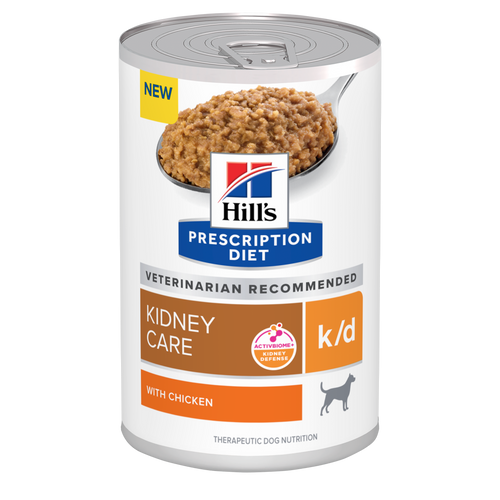
Kidney-support diets must meet specific nutritional standards. For example, the Hill’s Kidney Care Dog Food is formulated with reduced phosphorus & sodium, enriched with omega-3 fatty acids to helps protect vital kidney function and slow disease progression. Additionally, its E.A.T. technology is designed to help stimulate appetite and increase food intake. If your dog has kidney-related health concerns, consult your veterinarian to select the formula that best suits your pet’s condition.

As mentioned above, proper diet and hydration are essential for supporting kidney health. Feed a low‑phosphorus, high‑moisture renal diet to help reduce kidney workload, and encourage your dog to drink plenty of fresh water to maintain good hydration. Early detection is equally important. Owners should closely monitor any changes in appetite, thirst, urination, or energy levels, and schedule regular veterinary check‑ups to identify problems early and adjust the care plan as needed.

References: 1Lulich JP, Osborne CA, O’Brien TD, Polzin DJ. Feline renal failure: questions, answers, questions. Compend Contin Educ Pract Vet. 1992;14(2):127–153. Brown SA. Renal dysfunction in small animals. The Merck Veterinary Manual website.