





Urinary health for Cats

Urinary Issues, Cat Food & Care

Urinary health for Cats

Urinary Issues, Cat Food & Care

Why is my cat peeing everywhere?


One moment everything is fine. The next, your cat is avoiding the litter box entirely. If you're wondering whether your cat is acting out, the answer is almost certainly no. Inappropriate urination is one of the most common signs of a cat urinary health issue — your cat's body is simply asking for help.


Stress, diet shifts, and environmental changes can all trigger or worsen symptoms in cats with urinary issues, and the longer it goes unaddressed, the harder it becomes to manage. The good news: with the right vet care and a specialised cat food for urinary health, most cats recover well and the risk of recurrence can be significantly reduced.

Understanding a misunderstood urinary issue


Urinating outside the litter box is frequently mistaken for a behavioural problem rather than a medical one, making feline urinary issues among the most misunderstood cat health conditions. Recognising the signs early means you can take action sooner and make more informed decisions about your cat's urinary health.

How to tell if a cat is having urinary problems?


As stressful as your cat’s urinary issues may be for you, they are often just as painful for your cat. Because cats tend to suffer in silence, urinary problems may go unnoticed for some time before being recognized and diagnosed. If you suspect your cat may have a urinary disorder, watch for the following key signs:

Peeing in the house Icon

Accidents in the house


If your adult cat is having frequent accidents or urinating in unusual places, this could be a sign of several common urinary conditions that often are manageable with the help of your vet.

Pain while urinating icon

Yowling when urinating


If your cat is straining to urinate or is making pained, uncomfortable noises in their litter box, check with your vet immediately. These could be signs of feline idiopathic cystitis (FIC), bladder stones or even urethral plugs.

Blood in urine icon

Blood in urine


Schedule an appointment with your vet if you discover blood in your cat’s litter box or urine. A cat peeing blood is a serious sign and could be related to FIC, bladder stones, a urethral plug or a variety of other causes and should be evaluated by a veterinarian.

Frequent urination icon

Frequent urination


More time in the litter box than usual with the absence of urine or only small drops of urine should be assessed by your veterinarian immediately. This could be a sign of a urethral obstruction, which is a medical emergency.

Is your cat experiencing urinary issues?

Stress may be a factor. Take our quiz to find out if stress could be affecting your cat.

FIC and iLUTS (Idiopathic lower urinary tract signs)


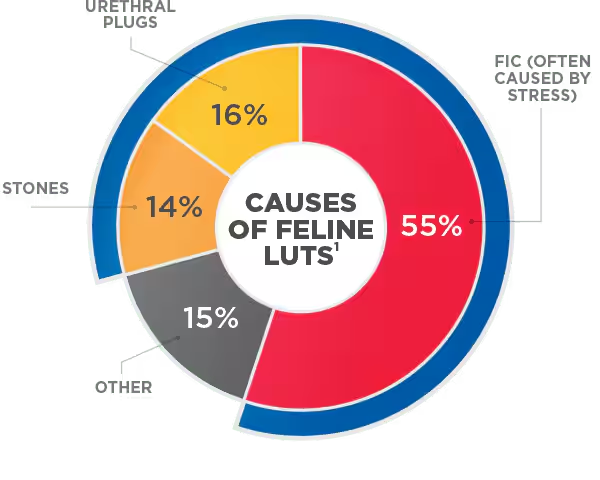
The most common urinary disorder in cats is feline idiopathic cystitis (FIC), a diagnosis that is typically made after other possible conditions are eliminated. While the cause of FIC is unknown, stress is thought to be a significant factor.

And because FIC signs — such as urinating outside the litter box — frequently come back throughout a cat’s life, managing this condition requires lifelong care.

Stones


Struvite and calcium oxalate are common stone types in the urinary tract that can cause numerous and painful ailments for your cat.

For cats prone to stones, vets may recommend increased water intake and therapeutic nutrition to dissolve the current stone and help reduce the likelihood of future stone formation.

Plugs


The urethra is a tube that carries urine from the bladder and out of the body. When struvite crystals in your cat’s urine combine with mucus, they can form a urethral plug.

If your cat is yowling or making frequent trips to the litter box or only urinating small amounts, a urethral obstruction may be the cause. Contact your vet immediately as this condition is a medical emergency and could be fatal if not treated.

What can I give my cat for urinary health?


When it comes to urinary issues, there is no one-size-fits-all solution. That’s why it’s important to work closely with your veterinarian to determine the best course of action for your cat’s unique needs.


In general, cats diagnosed with urinary disorders benefit from a comprehensive approach that may consist of everything from urinary cat food to medication and even surgery, if needed. But remember, even with the best treatment, some cats may have recurring signs or periodic episodes.

Nutrition icon

Nutrition


For most feline urinary conditions, nutrition is the standard of care, as it can help to reduce the risk of future episodes. Urinary health cat food will moderate their intake of certain minerals like calcium, phosphorous and magnesium that can cause crystals to form in the urine. Some foods are even formulated to help pets prone to stress so as not to trigger their urinary problem.

Environment Icon

Environmental enrichment


It’s not uncommon for environmental stressors to trigger urinary episodes. You can help soothe a stressed-out feline friend by creating a quiet home environment, providing your pet with a scratching post and vertical climbing space and even simply giving them extra love and affection.

Medication Icon

Medication


Depending on your cat’s particular needs, a veterinarian may prescribe medication to help your pet through an acute episode. Typically, this medication is intended to help your pet manage any pain associated with their condition while you supplement their treatment with proper nutrition and environmental enrichment.

Frequently Asked Questions

Do not scold your cat, as inappropriate urination is often a sign of distress or illness rather than misbehavior. Calmly observe the frequency, amount, and color of the urine, as well as any signs of pain such as straining or vocalizing, and share this information with your veterinarian. Check for potential stressors at home, including recent changes to the environment or litter box, since stress is a major trigger for feline idiopathic cystitis. Seek veterinary care promptly to rule out infection, stones, or obstruction, and do not wait more than 24 hours, especially if your cat is straining or producing little urine.


It depends on the diagnosis. Many feline urinary conditions, such as idiopathic cystitis or calcium oxalate stones, require long‑term or lifelong dietary management to reduce recurrence risk. Prescription urinary diets are formulated for long‑term nutritional balance and safety. However, different urinary conditions require different formulations. Always follow your veterinarian’s recommendation and schedule periodic urine testing to ensure the diet remains appropriate.

Veterinarians commonly recommend prescription urinary diets, including therapeutic wet food formulas that help increase water intake and dilute urine, an important factor in reducing stone formation risk. Before starting any urinary diet, a veterinary diagnosis is essential to determine the type of urinary issue or stone involved, as dietary recommendations vary accordingly.

Yes, especially in male cats. Because male cats have a long, narrow urethra, obstruction can quickly become life‑threatening. Complete blockage can lead to kidney failure within 12–24 hours and may become fatal within 24–48 hours if untreated. Female cats are less prone to full obstruction but can still suffer serious complications. If your cat is unable to urinate, repeatedly straining, crying in pain, vomiting, or appearing weak or collapsed, treat it as an emergency and seek immediate veterinary care.

Recovery time depends on the underlying cause and severity of the condition. Mild idiopathic cystitis may improve within 5–10 days with stress reduction and supportive care, while bacterial infections typically require 2–4 weeks of antibiotics. Cases involving stones or obstruction may need hospitalization, surgery, and long‑term dietary management. Recurrence is common, with studies showing that idiopathic cystitis returns in about 22–35% of cats within six months, so continued veterinary monitoring and long‑term management are essential even after symptoms improve.

References:


1Lekcharoensuk C, Osborne CA, Lulich JP. Epidemiologic study of risk factors for lower urinary tract diseases in cats. J Am Vet Med Assoc. 2001;218(9):1429-1435.