Weight management for cats

Weight management for cats

Signs, Risks & How to Help Your Cat Lose Weight


Just an extra kilogram or two can significantly impact your cat's health and quality of life. Overweight cats tend to play less, show signs of depression, and face a much higher risk of serious health conditions. Because weight gain in cats often happens gradually, it's easy to miss the warning signs — which is why proactive weight management for cats is so important.

Your cat may look perfectly fine to you, but the ideal weight varies by size and breed. The best way to know for sure is to consult your veterinarian , but here are some common signs your cat may be carrying excess weight:

Overweight signs include:

check icon
Loss of an obvious waist
check icon
Excessive abdominal fat and noticeable belly
check icon
Shortness of breath or heavy breathing after light activity
check icon
Collar needs loosening
check icon
Bad temper or increased irritability
check icon
Slow movement and reduced interest in play
Besides observing their physique, you can also assess if your cat is maintaining a healthy weight by touch. Place your hands on their side, and if their ribs are hard to feel or even impossible to feel, they’re likely overweight.
Thin cat Icon

Signs of Underweight:


The ribs, spine and hip bones are visible from a distance, and there is no discernible body fat.

Healthy cat Icon

Signs of Healthy Weight:


The ribs can be easily felt without excess fat, and you can see the waist behind the ribs from above. Abdominal tuck is present.

Overweight Cat Icon

Signs of Overweight:


You can’t feel ribs because they are covered in fat. Large fat deposits are over the neck, chest, spine and base of tail. Both waist and abdominal tuck are absent.


Still not sure? Check your cat's weight now!


Take our L.O.V.E. test to find out. You’ll even receive a personalized weight report for your pet to share with your vet.

Weight gain is the result of an increase in body fat. This is usually caused by eating too much, especially when combined with a lack of exercise. But there can be other contributing factors, too.
Clock icon

Age

Older cats are often less active and require fewer calories, which is why nutrition formulated for their age is vital to their weight and overall health.

Paw Icon

Breed

Different cat breeds can have different metabolisms, which means some breeds are more likely to become overweight.

A cat with shield Icon

Neutering / Spaying

Clinical studies have shown that the energy requirements of neutered cats are lower, and they require fewer calories.

Heart Icon

Medical Problems

Very occasionally, weight gain is associated with a medical disorder that may require specific treatment.

Pet food bowl icon

Overfeeding

Consuming more calories than necessary can contribute to weight gain. This can be due to unlimited or inconsistent portions of food.

A cat and a cat food bowl icon

Feeding Habits

Feeding table scraps and “people food,” or too many treats, can lead to obesity.

Gender Icon

Gender

Due to physiological structure and hormonal influences, female cats are more prone to obesity or overweight than male cats.

An active cat icon

Lack of exercise

Too much food and too little exercise produces a typical result: obesity.

See what those foods really mean for your pet

The key to helping overweight cats lose weight is proper calorie control and regular exercise while maintaining a balanced diet. Cats are naturally sedentary, so short interactive play sessions combined with dietary control can be effective. Consult your veterinarian before starting a weight loss plan. Here are some exercises you can do with your cat:

Playing with Toys

Cat and feather toys can mimic prey movement and stimulate a cat’s natural hunting instincts. Schedule two 10–15 minute play sessions daily to encourage chasing, pouncing, and jumping, helping burn excess energy and strengthen the bond between you and your cat. Owners can also make DIY toys to promote more exercise.

 A grey cat playing with a toy on a sofa
 A grey cat playing with a toy on a sofa

Catching the Light

A flashlight beam can trigger a cat’s instinct to chase, making it a simple and effective form of exercise. Avoid high-intensity laser pointers, as direct light may damage their eyes. To prevent frustration, end the session with a physical toy so your cat can successfully “catch” its prey.

A cat trying to grab a hanging toy

Power Walking

Choose a well-fitted harness and take your cat for walks in a quiet outdoor area, such as a community garden. New scents, sounds, and sights can enrich your cat’s sensory experience. Start gradually by letting your cat get used to the harness indoors, then slowly introduce outdoor walks to ensure the process is safe and stress-free.

A man on a hike holding a cat
A cat looking up at a bowl of cat food.

Choosing weight management food for cats

Dietary adjustment is the foundation of successful weight loss in cats. Weight-loss formulas are typically lower in calories and higher in fiber to help control appetite while keeping cats feeling full. Consult your veterinarian to select the right formula based on your cat’s age, breed, and health, and follow portion guidelines carefully.


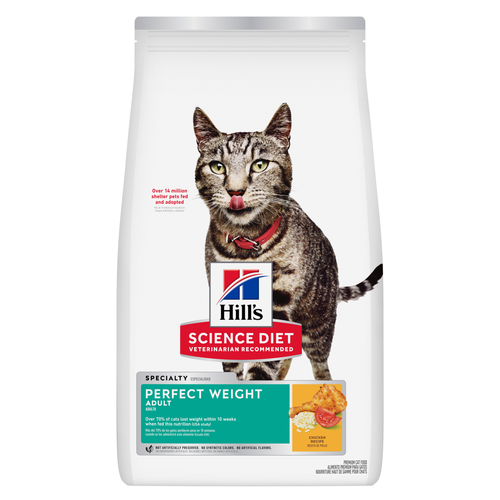
Hill’s Weight Management food for cats are specially designed for overweight cats and are commonly recommended by veterinarians. Since fat cells accumulate once a cat becomes overweight, early and consistent management leads to better results. An effective plan includes a suitable weight-loss diet, regular exercise, routine weigh-ins, and ongoing veterinary monitoring.

Frequently Asked Questions

Start by scheduling a veterinary appointment to determine your cat’s ideal target weight. Your veterinarian can recommend an appropriate weight‑loss formula and daily feeding amount based on your cat’s age, breed, and health condition. At home, eliminate extra treats and free feeding, offer measured meals at consistent times, and increase daily interactive play. Avoid rapid dieting, as sudden weight loss can seriously affect liver health.


While many adult cats weigh between 3.5–5 kg, healthy weight varies by breed and body frame. Larger breeds, such as Maine Coons, may naturally exceed 7 kg. Instead of relying only on weight, assess body condition: you should be able to feel the ribs easily, see a defined waist from above, and notice a slight abdominal tuck from the side. If the body appears round and the ribs are difficult to feel, your cat may be overweight. A veterinarian can provide a professional body condition assessment.

Effective weight loss combines controlled nutrition and increased activity. Feed a veterinarian‑recommended weight‑management formula and strictly follow portion guidelines. Avoid treats and human food. Encourage at least 15 minutes of interactive play daily using toys, wand teasers, or food puzzles, and provide climbing structures to promote movement. Monitor your cat’s weight regularly and adjust the plan as needed with veterinary guidance.

A safe and sustainable rate of weight loss is 0.5%–1% of body weight per week (approximately 30–60 g per week for a 6 kg cat). Rapid weight loss can lead to feline fatty liver disease, a serious condition requiring urgent treatment. Never drastically reduce food intake. Weight loss should always be gradual and supervised by a veterinarian, with regular monitoring and adjustments along the way.

A black cat standing beside a white curtain

Put your overweight cat on the road to recovery


If your cat is already having trouble with weight problems, there are plenty of things you can do to improve their condition.


Not sure which weight loss options are right for your cat?