


If you share your life with a feline companion, you probably already know that litter box issues are among the most common reasons pet parents seek veterinary care. However, one particularly painful condition, bladder stones in cats, frequently flies under the radar until it becomes a severe medical issue. Whether your cat is showing subtle signs of urinary discomfort or you are managing a recent diagnosis, understanding how these mineral formations develop is vital for their long-term health.
Read on to discover the fundamental biological differences between urinary crystals and true stones, how to spot the critical warning signs before they turn into a crisis, and the essential prevention strategies needed to protect your cat from this highly recurrent condition.
What Are Bladder Stones in Cats?
Bladder stones, or uroliths, are simply organized accumulations of hardened minerals that are found in urine. They can occur anywhere along the urinary tract, from the kidneys all the way to the urethra (the narrow tube carrying urine out of the body).
Stones range in size. Your cat could have a tiny stone or one the size of their bladder. Stones also range in shape and color. They can be smooth or have jagged edges. Stones pose problems because they can damage the surrounding tissue, cause inflammation, scar tissue and predispose a cat to infection, especially if they have rough or jagged edges.
Crystals vs. Stones
If you've heard of urine crystals, you might be wondering how they differ from bladder stones. According to the Merck Veterinary Manual, crystals are microscopic mineral structures. When these crystals clump together, aggregate, and grow large enough to be visible to the naked eye, they officially become bladder stones. While the presence of crystals indicates a urinary environment that favors stone development, crystals are not a definitive guarantee that a stone will form.
Are Bladder Stones in Cats an Emergency?
Yes, they absolutely can be. While some cats live with stones for a time without showing clinical signs, a stone can easily slip into the urethra and cause a urinary obstruction (a blocked urethra).
When a cat experiences a urinary blockade, they cannot pass urine at all. This causes toxins to quickly build up in the bloodstream, turning it into a life-threatening medical emergency. This life-threatening block is most frequently observed in male cats due to their narrower urethras. If your cat is straining but producing no urine, you must seek emergency veterinary care immediately.
What Are the Symptoms of Bladder Stones in Cats?
The exact symptoms of bladder stones in cats largely depend on the size, number, and location of the stones. In some instances, cats remain entirely asymptomatic. However, when stones scrape against the bladder wall, they cause severe inflammation, tissue damage, and scar tissue, which predisposes the cat to secondary bacterial infections.
Watch for these primary warning signs:
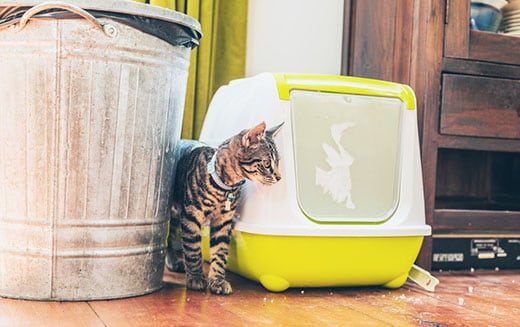
• Frequent trips to the litter box
• Straining to urinate or frequent urination of small amounts
• Blood in the urine (hematuria)
• Vocalizing (crying or meowing) while in the litter box
• Urinary accidents outside of the box
• Acting constipated (cats straining to urinate often mimic the posture and behavior of a constipated cat)


Tasty Tips
What Causes Bladder Stones in Cats?
According to the American College of Veterinary Surgeons, while the development of these stones is complex, a cat's food may play a role. They also rarely form secondary to bladder infections in cats.The biological mechanisms behind stone formation generally trigger when a cat's urine becomes oversaturated with specific minerals. Factors that influence this include:
Urine pH: Highly acidic or highly alkaline urine creates the perfect environment for specific minerals to crystallize.
Dietary Factors: Consuming excessive amounts of minerals like magnesium, phosphorus, calcium, and chloride, alongside low moisture intake, increases mineral concentration in the bladder.
Underlying Systemic Illness: Conditions like chronic kidney disease or idiopathic hypercalcemia (unexplained high calcium levels in the blood) directly alter urine composition.
Water Consumption: Cats with low water intake produce highly concentrated urine, making it much easier for minerals to precipitate out and form stones.
How Veterinarians Diagnose Bladder Stones
Because the symptoms of bladder stones often resemble those of other feline lower urinary tract diseases (FLUTD), a definitive diagnosis requires diagnostic imaging and laboratory testing. While certain tests can strongly suggest the type of stone present, the exact composition can only be confirmed after the stone is collected and analyzed.
1. Radiographs (X-rays) & Ultrasound: Most bladder stones are radiopaque, meaning they show up clearly as bright white objects on an X-ray. Ultrasound can detect stones that might be less visible on standard film.
2. Urinalysis & Microscopic Sediment Exam: Evaluating a urine sample provides crucial clues regarding urine pH and the presence of microscopic crystals.
3. Laboratory Stone Analysis: While X-rays and crystal types give your vet an educated guess, the only way to definitively identify the exact composition of a stone is to physically collect it and send it to a specialized laboratory for analysis.
Types of Bladder Stones in Cats
The two most common types of bladder stones in cats include:
1. Calcium Oxalate Stones
According to data from the Merck Veterinary Manual, calcium oxalate stones are currently the most common urinary stone found in cats.
Age and Breed Risks: These are most often seen in middle-aged to older cats. Breeds that face the highest statistical risk of developing calcium oxalate stones include the Ragdoll, British Shorthair, Exotic Shorthair, Himalayan, Persian, and Scottish Fold.
The Underlying Causes: Calcium oxalate stones typically form when a cat's urine becomes overly acidic. They are frequently diagnosed in cats experiencing elevated blood and urine calcium levels, a condition medically known as idiopathic hypercalcemia, as well as in cats suffering from chronic kidney disease.
2. Struvite Stones
Unlike calcium oxalate, struvite stones are composed of magnesium, ammonium, and phosphate. They thrive in an entirely different urinary environment.
Age and Breed Risks: Struvite stones are typically found in younger cats who have been neutered. While these stones can affect absolutely any breed, the domestic shorthair, exotic shorthair, Ragdoll, and Himalayan are documented as being the most at risk.
The Underlying Causes: These stones form in highly concentrated, alkaline urine, which means the urine has a high, non-acidic pH. Cats who consume high dietary amounts of magnesium, phosphorus, calcium, chloride, and fiber are much more likely to develop struvite formations.
Treatment Options for Bladder Stones in Cats
Once diagnosed, bladder stones in cats treatment paths diverge completely based on the specific type of stone present:
1. Surgical Removal and Physical Procedures
Required for Calcium Oxalate: Calcium oxalate stones cannot be dissolved with medication or diet. They require direct surgical removal (cystotomy) to clear the bladder.
Emergency Relief: If a stone causes a urethral blockage, emergency flushing, catheterization, or surgery is required immediately to restore urine flow. Any underlying bacterial infections must be aggressively treated with antibiotics.
2. Dietary Dissolution
Applicable for Struvite: In many non-emergency cases, struvite stones can be completely dissolved using a strict, specialized therapeutic food (such as Hill's Prescription Diet).
Proven Timelines: Research demonstrates that these specialized therapeutic urinary diets can reduce the size of struvite stones by 50% in as little as 2 weeks, with an average time to complete dissolution taking about a month.
How to Prevent Bladder Stones in Cats
Bladder stones carry a notoriously high recurrence rate. If a cat returns to the exact lifestyle and diet that caused the initial stones, they are highly likely to reform. Prevention relies on altering the urinary environment:
Commit to Therapeutic Foods: Keeping your cat on a long-term, vet-recommended therapeutic urinary diet controls urine pH and limits the raw mineral building blocks available to create stones.
Hydration is Key: Increasing your cat's total water intake dilutes the urine, making it much harder for minerals to clump together. The easiest way to achieve this is by switching your cat from dry kibble to wet canned food, adding water fountains, or adding extra water to their meals.
Routine Monitoring: Regular veterinary check-ups and urinalysis help track urine pH and catch crystal formations before they mature into painful stones.
Together you and your veterinarian can determine the right therapy or combination of therapies to keep the stones at bay.
Frequently Asked Questions
How long can a cat live with a bladder stone?
A cat can potentially live with a bladder stone for months or even years if the stone remains small, loose, and doesn't cause severe chronic infection or inflammation. However, the risk of a sudden, life-threatening urinary blockage is always present. A stone can shift at any moment, turning a stable situation into an immediate medical crisis.
How common are bladder stones in cats?
Bladder stones are highly common in domesticated cats and represent a major percentage of all Feline Lower Urinary Tract Disease (FLUTD) cases evaluated by veterinarians daily. Modern sedentary lifestyles and dry-food diets contribute significantly to these high occurrence rates.
How can I tell if my cat has bladder stones?
You can spot potential bladder stones by watching for changes in their litter box habits. Look for frequent straining, crying out while urinating, small drops of bloody urine, or sudden accidents outside of their box on cool surfaces like tile or bathtubs. A veterinary X-ray or ultrasound is the only definitive way to know for sure.
What food can I give to my cat with bladder stones?
You should exclusively feed a veterinary-formulated therapeutic urinary food, such as Hill’s Prescription Diet. These highly specialized formulas are precisely balanced to regulate urine pH and restrict mineral levels. Standard over-the-counter cat foods often contain excess minerals that can make the stones significantly worse.
Can bladder stones in cats dissolve on their own?
No, bladder stones will not dissolve on their own without active veterinary intervention. While struvite stones can be successfully dissolved using a strict prescription therapeutic diet, calcium oxalate stones can never be dissolved naturally or chemically, and strictly require surgical removal.

Put your cat on a diet without them knowing
Our low calorie formula helps you control your cat's weight. It's packed with high-quality protein for building lean muscles, and made with purposeful ingredients for a flavorful, nutritious meal. Clinically proven antioxidants, Vitamin C+E, help promote a healthy immune system.
Put your cat on a diet without them knowing
Our low calorie formula helps you control your cat's weight. It's packed with high-quality protein for building lean muscles, and made with purposeful ingredients for a flavorful, nutritious meal. Clinically proven antioxidants, Vitamin C+E, help promote a healthy immune system.